Tag Archives: parenting

“M” is for Motherhood

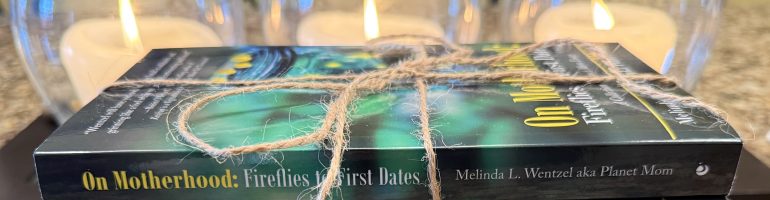
9781532071621_pap_FQA.inddWhile it’s true the term “motherhood” is a simple collection of ten letters, specifically arranged for ease of pronunciation, it is suggestive of so much more. In sum, I regard it as a wholly intangible, behemoth-like affair that effectively upended all that I thought I knew about life as a decidedly callow twenty-something. Needless to say, the experience continues to shape and mold me, schooling me day and night in the curious ways and means of children, wowing me with the inherent remarkableness of the aforementioned creatures and rendering me forever changed as an individual. As it should be, I suppose. That said, here’s how I spell motherhood.

M  Motherhood is a messy beast-of-a-thing—with its suffocating mass of sippy cups and sidewalk chalk, lemonade and lunch boxes, bicycles and building blocks. Never mind the ubiquitous nature of stuffed animals and the profusion of refrigerator-worthy masterpieces that inhabit our homes, marking time as our progenies progress along the winding path of childhood. And let us not forget all the lovely shades of gray with which we must contend: the tangled complexities of teens, the relentless questioning of toddlers and the soft underbelly of the headstrong child—the one we try desperately to govern without stifling. Indeed, motherhood is a messy business.

O  Motherhood is overwhelming to be sure—a seemingly insufferable, plate’s-too-full collection of moments that, when taken together or viewed within the prism of the unattainable ideal, beat us into submission, the thrum of parental failure ringing in our ears. That said, there’s nothing quite like comparing oneself to the façade of perfection—holding our harried selves up against those who appear to be getting it right, the moms who keep all the plates spinning as if flawless extensions of themselves.

T  Motherhood is timeless—an eternal post to which we are assigned, willing or not. From the moment our writhing infants, ruddy-faced and wrinkled, are placed upon our chests, motherhood begins in earnest. And although our parent/child relationships shift and season over time, they remain inextricably woven within the fabric of our lives. Not even death can end the appointed role, as a mother’s counsel is sought long after she has been eulogized.

H  Motherhood is a humbling experience. Ask anyone who has ever faced the stinging truth as it relates to intolerance and hypocrisy—delivered by a six-year-old, no less, soundly putting those who ought to know better in their respective places. So often kids eclipse our academic abilities, too, reminding us how important it is to embrace change. Never mind that every fiber of our being screams in protest. Moreover, becoming a parent means a humbling loss of identity to some extent, punctuating the uncertain nature of our so-called significance in certain circles. We are simply so-and-so’s mom now—maker of sandwiches, applier of sunscreen, gracious recipient of dandelions. But somehow the title feels right, as does finding a pretty vase for the dandelions.

E  Motherhood is edifying in that literally every day we learn something new—most of which is harvested from conversations at the dinner table or at bedtime, from diaries that beckon unremittingly or from tiny notes we discover wadded up in someone’s pants pocket. We spend a lot of time watching, too, realizing that our mothers were right all along. Children will, indeed, cut their own hair, shove peas up their noses and breach late night curfews to test both boundaries and our resolve. Arguably, the lessons of motherhood never truly end.


R Motherhood is real. Good, bad or indifferent, it is palpable, inimitable and exceedingly enlivening. It is the stuff from which memories are made and so much purpose is derived. For me, anyway.

H  Motherhood delivers nothing less than a heady rush—an intoxicating dose of awe wrapped in the sheer rapture of having had a hand in creating life, not to mention having been called upon to shape one or more future citizens of this world. Mothers are, without question, difference-makers.

O  Motherhood makes us swell with omnipotence now and again—a grand and glorious surge of I’M THE MOM, THAT’S WHY sort of sway that leaves us feeling all-powerful, if only fleetingly. But nothing makes us puff up more than hearing censure as priceless as, “Dad, did you get Mom’s permission to do that? She makes the rules, you know.”

O  With motherhood comes obsession. And spiraling panic. And unfounded fear. And, of course, debilitating worry over that which will probably never occur anyway. In sum, we fret about bumps and bruises, unexplained rashes and fevers that strike in the dead of night…about report cards and recklessness, friends we cannot hope to choose and fast cars that will whisper to our charges, inevitably luring them within, despite our best efforts to forbid such foolishness.

D  Motherhood is delicious—a profoundly gratifying slice of life we would do well to savor. Never mind its patented swirl of disorder and wealth of doubts, fears and impossible demands. Indeed, motherhood threatens to swallow us whole, while at the same time allowing us to drink in its goodness, gulp by gulp.

Planet Mom: It’s where I live (reflecting on the many facets of motherhood).

Copyright 2011 Melinda L. Wentzel


Comments Off on “M” is for Motherhood

Filed under In the Trenches of Parentville

A Tree is Nice

www.melindawentzel.comWe have a half-dead tree in our yard. Make that FIVE half-dead trees. A pine, an ash and three fruit-bearing ones, although they haven’t produced much of anything in a very long while. Hence, the time has come to take them down, which by almost anyone’s standards makes perfect sense. It’ll be safer, since the risk of toppling over during a windstorm will be reduced to zero. We’ll also likely get some ample firewood out of the deal and we’ll free up a sizeable portion of the lawn for Frisbee in the process.

Everything about the felling of said trees is good. Except that it isn’t. The sad part of it is that there are memories attached to the trees in question—especially the peach tree, whose blossoms burst forth each spring in a glorious explosion of pink. Likewise, in winter its snow-covered boughs make me want to fetch the camera to freeze the moment in time. I just know I’ll look out my window weeks from now and lament that we ever made the decision to cut it down and dig up its roots, erasing from my mind the notion that it ever existed.

For more than 20 years we’ve been harvesting peaches from that tree. My husband was the designated proper-upper of craggy branches, assigned with the task of placing boards beneath its heavy limbs, laden with bushels of ripened fruit. Together we picked them, sampled them and then hauled bucket after bucket into the garage—a staging area for figuring out what to do with them next. Fruit flies be damned.

I wish I could claim that I baked an impressive number of pies with what we reaped over the years, but that would be a lie. Many of my neighbors, however, probably did, as we were inclined to give away scads of the fuzzy fruit each September, knowing we’d never consume all that we had gathered.

Likewise, I’m sure I’ll recollect a time when I watched my twin toddlers from the very same window, perched upon their dad’s lap as he circled the peach, the apple and the pear tree with the riding lawn mower. Round and round they would go, ducking beneath the limbs, smiling in the sun. One year they even built a teepee of sorts by leaning leafy branches we had trimmed from other trees against it. For days on end that summer, it was the most wonderful fortress in all the land, providing a haven of shade and camouflage for all who were so fortunate to crawl inside.

The aforementioned peach tree was one of their first climbing trees, too, its mossy branches low to the ground, inviting gangly children to develop and hone their scaling skills. I remember hoisting them up, assuring them it was perfectly safe and that it would be worth the effort because of the view it afforded them. After they had mastered the peach tree, it was on to taller and more daring venues, like the maple in the back yard, and the massive oak out front.

It’s possible I’ll miss the dear trees we plan to chop down, as well as any others we might lose in the years to come, because they remind me so much of my childhood—a time during which I practically lived in the woods behind my house, building a plethora of forts and climbing to the tops of trees all summer long, carving my initials there as a way of marking territory and perhaps time. I often wonder if my carvings remain, or even if the trees are still standing straight and tall. Far above the ground, swaying in the breeze was one of my favorite places to be, enveloped by a canopy of verdant leaves, summer after delicious summer. From my lofty perch, time was suspended, after all, and all was right with the world.

I can only hope that my progenies have had enough time in their special trees to make memories that will last.

Planet Mom: It’s where I live, lamenting the fact that our peach tree will soon be history. Visit me there at www.facebook.com/NotesfromPlanetMom.

Copyright 2018 Melinda L. Wentzel

Comments Off on A Tree is Nice

Filed under In the Trenches of Parentville

The Great Sock Abyss

IMG_0866Some time ago my daughter cleaned her bedroom, and in so doing resurrected an embarrassment of items that she had ostensibly given up for dead. Things that she hadn’t seen in such a long period of time that she forgot about them almost entirely. There was a pair of earbuds that had been MIA forever, more than a year’s worth of allowance and at least nine coffee cups, one of which still contained what could only be described as a fermented atrocity.

Lovely. Just lovely.

Most notably, she unearthed an ungodly number of socks. Tall ones. Short ones. Socks with stripes. Socks with dots. Socks that will never again be suggestive of clean and socks imprinted with teensy-tiny foxes. My personal favorite.

Admittedly, on more than one occasion I felt compelled to rummage around in her hovel, intent upon gathering all the lone socks in order to pair them appropriately—because it makes me insane to know that the socks in question are, for lack of a better term, estranged. Never mind wadded up, inside out and appearing as though they had been shot from a cannon.

How hard could it be? I remember thinking. You just look around, find the right patterns and put them together. It’s not rocket science. Truth be told, I found such an endeavor to be virtually impossible each time I tried—and subsequently failed—to locate matching pairs. It was as if her room had transformed into the Great Sock Abyss—the place where perfectly wonderful socks go to die, or, perhaps more tragically, become separated forevermore.

Like a fool, I had to ask my daughter the obvious question: WHERE DO THEY GO?

“I have no idea where the lost socks go, Mom. No clue.”

At any rate, when she cleaned her room (see paragraph one) I was patently euphoric over the news of her sock discovery, since their mates had been hanging on a rack in the laundry room since the dawn of time, in hopes of being reunited at long last. Imagine my surprise (read: PROFOUND GLEE) when she produced a dozen or more of the missing socks. It was categorically off the charts and almost as joyous an occasion as the time she found her favorite pair of dilapidated sneakers. Sneakers so pathetic, and yet so dear, she more affectionately refers to them as dead—as if the term “dead” were somehow a good thing. Technically speaking (she’s quick to remind me), they’re still functional. Sort of.

That said, in the past I’ve questioned her dead sneakers as well as the bizarre logic that would support a decision to NOT keep socks and their mates together. Who does that? And why on earth does it happen month after month?

“I don’t know, Mom. I guess I take them off and tell myself that I’ll put them together later, and then I don’t. Honestly, it’s just too much work.”

At that, I shook my head in disbelief and perhaps disappointment. Then I began to wonder if I had driven my mom crazy in much the same way. I couldn’t reliably recall my specific behavior as it relates to the pairing of socks, although all signs pointed to having been a neat freak, so they were probably ridiculously ordered. Perfectly aligned in neat and tidy little rows when clean. Turned right side out and paired properly when dirty.

Now that I think about it, it’s entirely possible that I drove my mother to distraction by spending an inordinate chunk of my teenage years organizing my closet and drawers. It’s also likely that my obsession with rearranging my bedroom furniture by myself at all hours made her nearly certifiable on occasion. In fact, I moved my dressers and bed around so often that their spindly legs were on the verge of snapping—something that would make any parent implode.

So maybe I should consider myself fortunate, only having to deal with lone socks for a decade or two. Not the annihilation of furniture. As an added bonus, my daughter’s bedroom gets cleaned. Occasionally.

Planet Mom: It’s where I live, probably looking for missing socks.

Copyright 2018 Melinda L. Wentzel

Comments Off on The Great Sock Abyss

Filed under In the Trenches of Parentville

April Awakening

I’ve always loved the springtime—especially the warm embrace of April. Of all the seasons, I’m inclined to say that it is my favorite—partly because baseball is back and the school year is drawing its last breath, but mostly because it is an era awash with newness. Almost indescribably so. Wisps of green now dot the underbrush, as if God had been handed a paintbrush and was then asked to create something slightly magnificent. Likewise, daffodils and forsythia, bathed in brilliant yellows, have been summoned from the places where shades of gray have lived for far too long. Lilac and cherry blossoms, too, are poised to burst with a profusion of muted hues and the sweet scents of spring. Armies of tulips will soon follow, standing straight and tall in the midday sun. Never mind the rain that must fall.

Indeed, the creatures of this season move me, too. The melodies of more songbirds than I can readily name fill the air along with the serenade of crickets—legions of them, welcoming each night as the woods grow thick with darkness and alive with a symphony of sound. Before long, the yellow-green flashes of fireflies will entrance my children, prompting them to give chase, mayonnaise jars in hand—but not yet. This is springtime and the earth feels soft and yielding beneath my feet, rekindling memories of running barefoot as a child, the cool blades of grass and spongy patches of moss mingling intimately with my toes. The same toes, mind you, that have begged to be reacquainted with the deliciousness of leather sandals since mid-February. The calendar assures me that the time is nigh and that the months ahead are certain to bring both warmth and goodness to the land. Springtime, it seems, is pregnant with possibility, which is yet another reason I love it so.

Or maybe it’s because all three of my children were born in the thick of April. Aries babies. Tiny souls destined for equal shares of independence and optimism, despite the vast array of frailties that came with being frighteningly preterm. As one might expect, I worried about umbilical cords, fontanels and cries I had yet to decipher. I think it was there in the hospital, amidst the haze of becoming a mother again and again, where I first recognized how unspeakably euphoric this season of new beginnings made me feel. How I could look outside my window at the verdant landscape below, all the splendor of spring unfolding before me, and then marvel, in the very same breath, at the bundles of neediness I had helped create—the ones with fuzzy, sweet-smelling heads and impossibly tiny toes, the babes I would soon rock in the creaky chair that had been my great grandmother’s.

Somehow, seeing the buds and the birds and the medley of green filled me with a tangible sense of hope and enthusiasm for whatever the future might bring. The sleepless nights and debilitating bouts of self-doubt I would surely encounter seemed almost manageable in the context of Mother Nature’s grand awakening. Deep within, I believed that no matter how ineptly I nursed the smallish beings in question or how spectacularly wrong I swaddled said infants, all would be well. My parenting days, though stunningly imperfect, would fill my cup, bind me inextricably to my brood and leave me wondering how I could ever function without them. The spring had arrived after all, and the canvas of my world had been painted with broad strokes of vibrant color and punctuated with untold joy.

Of course, it could be the birthdays we celebrate at this time of year that make the season so special. There are four if you count my husband’s—all within a span of three weeks—and I can’t help but indelibly etch in my mind all the cakes and candles, all the meals at fancy restaurants with friends and family and the countless parties with giddified bunches of little girls crowding around to see what bit of wonderfulness so-and-so happened to have unwrapped. And let us not forget the slumber parties. Lord knows I won’t.

Then again, it might simply be Easter, the mother of grand awakenings, that makes this time so very dear. Egg hunts and wicker baskets. Frilly dresses and shiny shoes. Palm fronds and penitence. Spiritually stirring events that cause me to ponder the true meaning of awakening, rendering me awestruck far beyond the month of April.

Planet Mom: It’s where I live (savoring every drop of spring). Visit me there at www.facebook.com/NotesfromPlanetMom.

Copyright 2011 Melinda L. Wentzel

Comments Off on April Awakening

Filed under In the Trenches of Parentville

Hands Upon My Heart

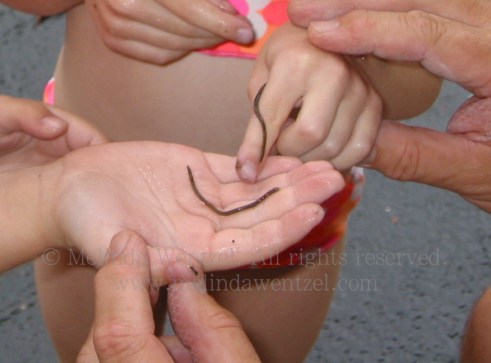
www.melindawentzel.comWhen I was nine or ten, I remember well my enthrallment with my mother’s hands. They were delicate and slender, sweetly scented and rose petal-soft—so completely unlike my own nicked and scraped, callused and chafed boy-like hands that were better suited for wielding a hammer and throwing a fastball than anything else. Mine were distinctively earthy, too, largely because remnants of dirt and grass simply refused to be removed. Or at least that was the sentiment I held for much of the summer. It was a byproduct of being a kid, I suppose, literally immersed in a world of sod and soil from sunup to sundown. Never mind my fondness of forests and rocky places, which typified a deep and abiding bond with nature—one that I’m not quite sure my mother ever completely understood.

At any rate, my hands told of who I was at the time—a tomboy given to tree climbing, stealing second base and collecting large and unwieldy rocks. Everyone’s hands, I’d daresay, depict them to a certain degree, having a story to tell and a role to play at every time and every place on the continuum of life. Traces of our journey remain there in the folds of our skin—from the flat of our palms and knobs of our knuckles to the very tips of our fingers. As it should be, I suppose.

For better or for worse, our hands are the tools with which we shape the world and to some extent they define us—as sons and daughters, providers and professionals, laborers and learners, movers and shakers. That said, I’m intrigued by people’s hands and the volumes they speak—whether they’re mottled with the tapestry of age, vibrant and fleshy or childlike and impossibly tender. Moreover, I find that which they whisper difficult to ignore.

Likewise, I’m fascinated by the notion that ordinary hands routinely perform extraordinary deeds day in and day out, ostensibly touching all that truly matters to me. Like the hands that steer the school bus each morning, the hands that maintain law and order throughout the land, the hands at the helm in the event of fire or anything else that smacks of unspeakable horribleness, the hands that deftly guide my children through the landscape of academia, the hands that bolster them on the soccer field, balance beam, court and poolside, the hands that bless them at the communion rail each week and the hands that brought immeasurable care and comfort to our family pet in his final hours. Strange as it sounds, I think it’s important to stop and think about such things. Things that I might otherwise overlook when the harried pace of the world threatens to consume me.

If nothing else, giving pause makes me mindful of the good that has come to pass and grateful to the countless individuals who continue to make a difference simply by putting their hands to good use. For whatever reason, this serves to ground me and helps me put into perspective how vastly interdependent and connected we are as a whole. Indeed, we all have a hand (as well as a stake) in what will be.

Equally important, is the notion of remembering what was. More specifically, the uniqueness of those I’ve loved and lost. A favorite phrase. A special look. The warmth of a smile or the joy of their laughter. Further, there’s nothing quite as memorable as the hands of those I’ve lost—like my grandfather’s. His were more like mitts, actually—large and leathery, weathered and warm. Working hands with an ever-present hint of grease beneath his hardened nails, and the distinctive scent of hay and horses that clung to him long after he left the barn. And although decades have passed, I can still see him pulling on his boots, shuffling a deck of cards and scooping tobacco from his pouch—his thick fingers diligently working a stringy wad into the bowl of his pipe, followed shortly thereafter by a series of gritty strikes of the lighter and wafts of sweet smoke mingling reluctantly with those from the kitchen.

Of course, my grandmothers’ hands were equally memorable. One had short, stubby fingers and a penchant for biting her nails to the nub. Always, it seemed, she was hanging wash out on the line, scrubbing dishes or stirring a pot brimming with macaroni—my favorite form of sustenance on the planet. By contrast, my other grandmother suffered the ravages of rheumatoid arthritis as evidenced by her hands. To this day I can picture a set of finely manicured nails at the tips of her smallish fingers—fingers that were gnarled and bent unmercifully, although they never seemed to be hampered when it came to knitting a wardrobe for my beloved dolls.

Not surprisingly, I can still summon an image of my brother’s hands, too. Almost instantly. They were handsome, lean and mannish-looking—yet something suggestive of the little boy he had once been lingered there. Needless to say, I am grateful for such delicious memories—the ones indelibly etched upon my heart.

Planet Mom: It’s where I live (remembering well the hands that have touched my life).

Copyright 2010 Melinda L. Wentzel

Comments Off on Hands Upon My Heart

Filed under In the Trenches of Parentville