
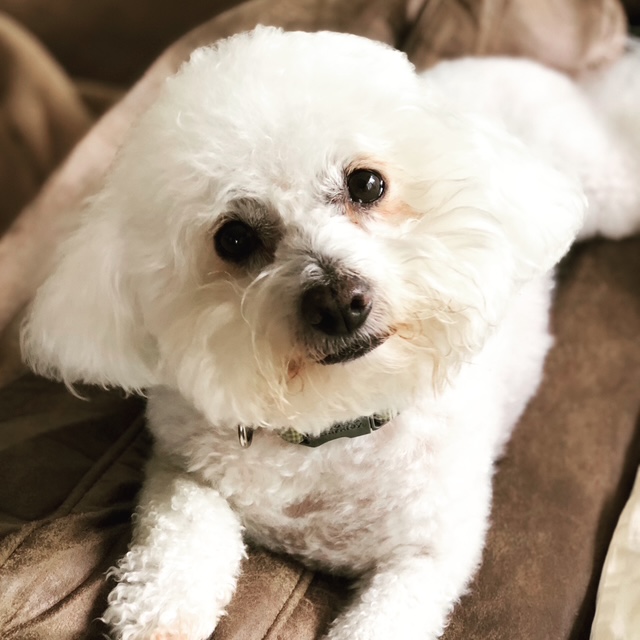
 If we’re lucky, some of the best years of our lives are considered the best because they are spent in the company of a dog. It’s what I think of when I hear the term “dog years” anyway. It’s not how old a dog may be in terms of human aging, but instead, it’s the expanse of time we humans get to bond with, love and be loved by a dog. Important distinction.
Our family has been fortunate to have had three amazing dogs over the years. Four if you count the one we adopted for my dad who was struggling with Alzheimer’s and needed companionship. That godsend-of-a-dog, Bear, is now living out his golden years with extended family since my dad passed away over ten years ago.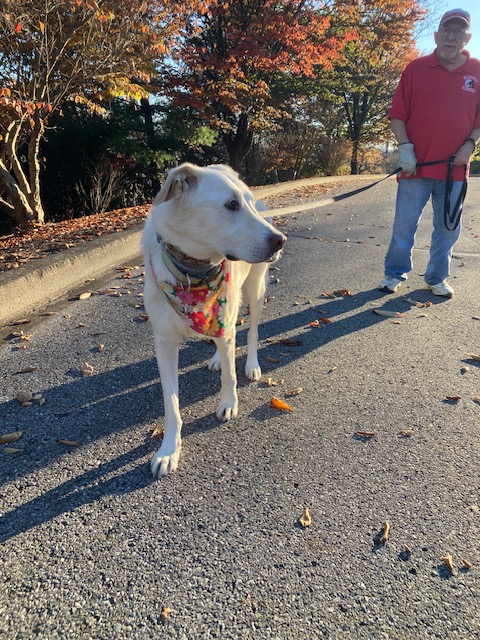
Sadly, we lost all three of our dogs; two to cancer and one to kidney disease. But not before we relished their tail-wagging days with us. I even found it ironically heartwarming that Jasper, our black lab mix, made it a habit to follow me into the shower or anywhere else I happened to be going. But like anyone else, we had not-so-fun times, too. Like the occasions that resulted in irreparable damage to our windowsills, being dragged in the street by our 95-pound yellow lab/greyhound mix and the 17-year stint I spent on my hands and knees scrubbing the floors after our Bichon Frisé, Jack, indiscriminately whizzed on them. He never quite grasped the idea of asking to go outside to do his business despite a boatload of encouragement. But I’ll never forget the night we chose him from the litter, an overgrown guinea pig lying on my chest, nuzzling my neck.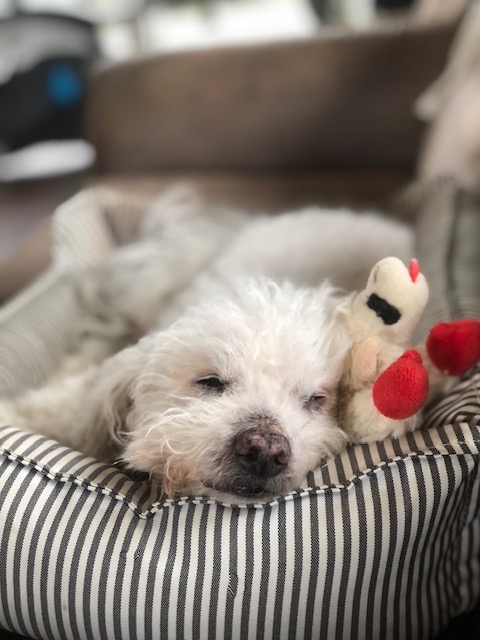
We decided not to adopt another rescue dog for a myriad of reasons, chiefly because we didn’t want to say goodbye after a life that would never be long enough. But it’s not as if we’ve sworn off dogs entirely. We still interact on a daily basis with the ones that live in our neighborhood and with those we encounter in our travels if the occasion presents itself. Not surprisingly, we get our “dog fix” if we’re permitted to pet said dogs and talk to them as if they were children. They really are children—just furrier. Most of them love the extra attention, and the tasty treats my husband always carries in his pocket. If, for whatever reason, we can’t pet them, I always smile. Dogs know your smile was meant for them.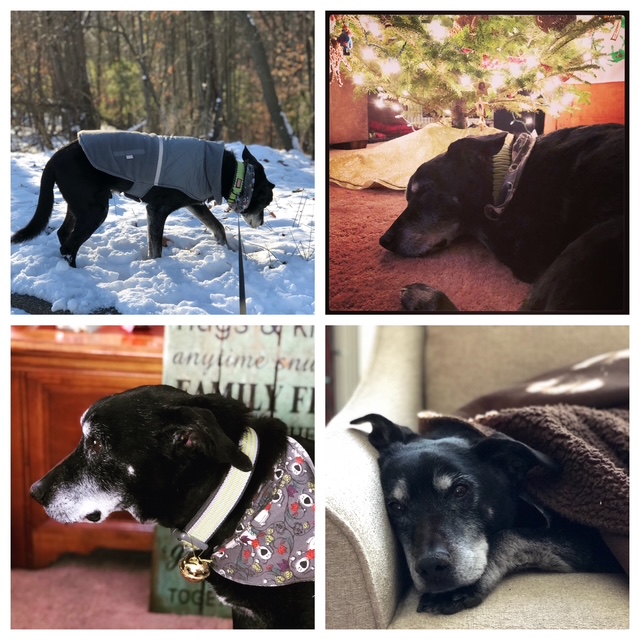
What I find funny is the fact that I’ll often remember the dogs’ names before I recall the owners’ names. And I most definitely know which dog belongs with which owner—just like my kids’ friends; I always knew which parents were connected to which kids, but I didn’t necessarily remember the adults’ names. Sorry, parents of my kids’ friends. It’s a character flaw I’m not especially proud of.
Likewise, I’m hoping the people I happen upon in the neighborhood aren’t offended because part of me is really more interested in their dog. I’ll take note if he or she has a new collar or leash, has just returned from the groomer’s or is absent from his/her human’s side. Of course, I’ll ask why the dog is missing, hoping it’s because of a fun field trip and not due to illness—or, Heaven forbid, their passing. What’s more, my husband and I try to remember to send a card expressing our condolences to the people who have recently lost a dog. I know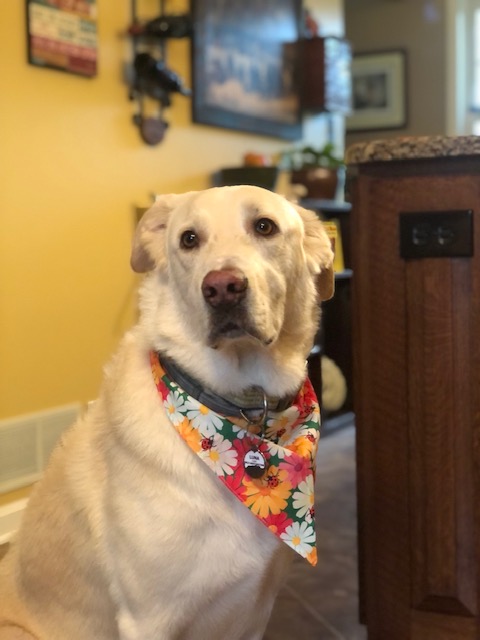 the cards we’ve received have meant so much. Our good friend, Denny, even went so far as to gift us money so that we might buy something to memorialize our dear Luna, the aforementioned 95-pound lab/greyhound mix. Thankfully, our vet made sure we had paw prints cast in plaster of all our dogs and a nose print and tuft of fur from at least one of them—something tangible that helps us remember the ticking of their nails on the floor and the cool, wet smooshiness of their noses. I often find myself picking up the prints and rubbing my fingers in the indentations of their toe beans, memorizing every curve, recalling their warmth in my hand.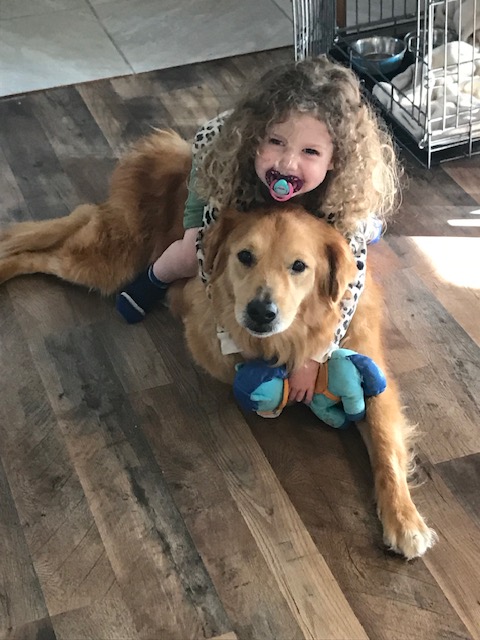
In lieu of that, I still have the trove of neighborhood dogs I pass on my walks, their fuzzy heads destined to be patted, not to mention the ones I see hanging their heads out of car windows, their pink tongues flapping in the wind, smiling broadly in the sun because they know, like I know, dog years are the very best years.
Welcome to my world. It’s where I live (probably petting a dog). Visit me there at www.facebook.com/NotesFromPlanetMom. Signed books are available on Etsy at PlanetMomMarket.
Copyright 2026 Melinda L. Wentzel



 Killing time is a completely foreign concept to my children. Completely. Foreign. It’s absurd actually—to think they’d deliberately destroy or somehow devalue so much as a solitary second of that delicious commodity. Quite frankly, it’s unthinkable. To them, the notion of being granted an extra nugget of time on this wonder-filled planet—whether measured in minutes, hours or days—is like stumbling upon a package that’s been shoved behind a thicket of boughs under a Christmas tree, all but forgotten, waiting to be discovered, brimming with endless possibility. It’s a gem through and through, and wasting its sparkle is simply not an option. Not for them, anyway. Time is far too dear.
 I remember it as if I were standing before it this very moment—the dirt road behind my childhood home that snaked through the mossy woods, carving a narrow, road-not-taken-inspired path along the base of a deep ravine, sheltered from the sun and from civilization it seemed. The place where a large and delicious chunk of my youth was spent surrounded by the pungent aroma of pine mixed with the earthy scent of decaying leaves and the ever-present drone of the creek that flowed nearby.




































 Planet Mom